
Current Fires
New This Week: Amazon Fires
In what has become a big story this week, details are finally emerging about wildfires burning in South America’s Amazon Rainforest. The Amazon fires became bigger news Monday […]
In what has become a big story this week, details are finally emerging about wildfires burning in South America’s Amazon Rainforest. The Amazon fires became bigger news Monday […]
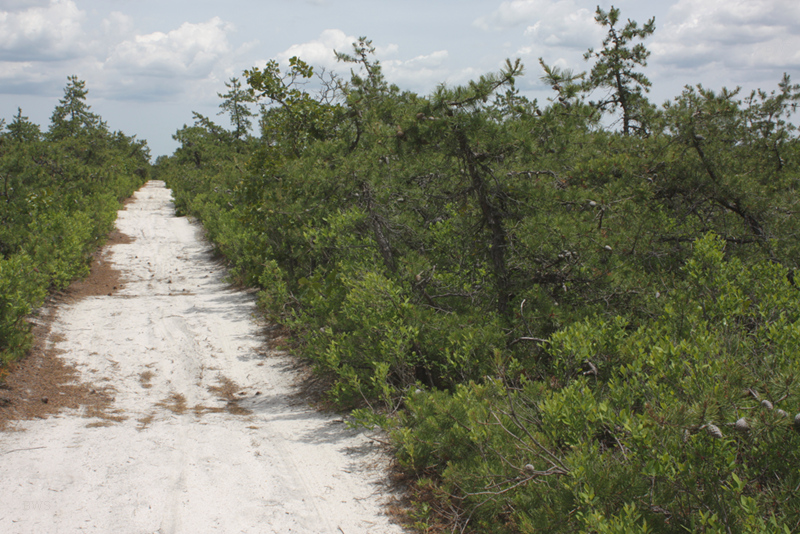
A small fire began Saturday afternoon in the Pine Barrens area of the Penn State Forest in Southern New Jersey. In less than two days, the Spring Hill […]
Yet another winter storm is slated to send more rain to Southern California this week and we at RedZone think it warrants a little inside info on the […]
Here we are dealing with yet another crazy autumn week of wildfire in California. As we noted earlier this fall, annually, Santa Ana Wind events cause new fire […]
Mendocino Complex Fire Summary The Ranch fire, which is being managed as a part of the Mendocino Complex, Started on July 27th on the north bound side of […]
Last Year’s Disaster During the massively destructive 2017 wildfire season in California, certain phrases kept being repeated. “Unprecedented”, “Uncharted territory”, “Historic”, “War zone”, “New normal”, and other descriptive […]
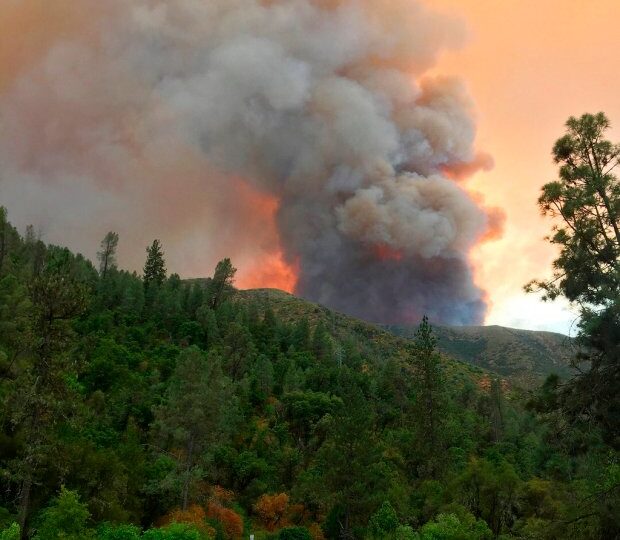
The Ferguson Fire began last Friday evening (13/July) in the Savage Trading Post area of Mariposa County, CA. It quickly grew past 4,000 acres by Sunday morning. Evacuations […]
Colorado has already seen its fair share of wildfires this season. The 416 and Burro Fires ignited in early June and are still raging. Almost daily Red Flag […]
The Tinder fire was ignited Friday April 30th in the Blue Ridge area about 50 miles southeast of Flagstaff. RedZone began actively monitoring that afternoon as it grew […]
UPDATE 01/03/18 @ 4:49 p.m. – The fire is now 92% contained at 281,893 acres. Thomas Fire Summary The Thomas Fire began in Ventura County just north of […]

Last Updated: November 2025
RedZone is committed to protecting the personal and operational data of our users, partners, and stakeholders. This Policy outlines how we collect, use, store, and safeguard data, ensuring it is handled responsibly, securely, and transparently.
We may collect information including, but not limited to:
We collect and process data only for clear and legitimate purposes, including:
We do not use your data for unrelated purposes without your consent.
Cookies and similar technologies are covered separately in our Cookie Policy.
RedZone is SOC-2, GDPR, and CCPA-CPRA certified. We implement technical and organizational measures to protect data from unauthorized access, loss, or misuse, including:
You may request access to your data, corrections, or deletion where applicable. You may also withdraw consent for data collection where it has been provided. Requests should be submitted to techsupport@redzone.co.
Children under the age of 13 may not give us their Personal Information.
We do not knowingly collect Personal Information from children under 13. If you are under 13, do not provide any information on or through a Website or Platform or through any features/registration, including your name, address, telephone number, email address or any screen name or user name you may use. If we learn we have collected or received Personal Information from a child under 13 without verification of parental consent, we will delete that information. If you believe we might have any information from or about a child under 13, please contact us at privacy@redzone.co.
This Policy may be updated periodically to reflect operational or technological changes. The latest version will always be available on our website.
We never share or sell your data. Ever. Your data is yours, not ours. We never share your data with third parties unless you ask us to.
RedZone is a cloud-based natural disaster monitoring and hazard assessment platform designed to simplify the process of creating customized data collection apps for conducting field surveys. As a cloud solution, the RedZone platform runs on the Amazon Web Services (AWS) infrastructure, including Elastic Compute Cloud (EC2), Simple Storage Service (S3), and Virtual Private Cloud (VPC). By harnessing the AWS infrastructure, RedZone offers higher-availability, redundant high-capacity storage, and added reliability over self-hosted software solutions.
All network communications within the RedZone platform are secured with 256-bit SSL (TLS 1.2) connections to keep your data safe through every step of the process.
Our application development process is designed to allow us to address security vulnerabilities, based on severity, as part of our standard release cycle.
Within AWS, RedZone’s instances are segmented into separate networks to provide additional controls over data flows within the system. All instances, including those not accessible to the public, are hardened and managed with automated configuration management.
We implement a least privilege approach to ensure that only administrative staff have access to the RedZone database in accordance with the RedZone Terms of Service. Access to the RedZone AWS infrastructure is managed by our corporate single-sign-on (SSO) solution, which requires multiple factors to grant access.
All RedZone staff undergo a background check and sign a confidentiality and non-disclosure agreement. Aside from our use of AWS, we do not outsource any aspect of RedZone development, operation, or administration.
For disaster recovery, a cold standby is maintained in a separate availability zone and kept in sync via streaming replication. We run nightly full backups of the RedZone database, which are retained for 30 days.
The RedZone infrastructure is deployed on Amazon Web Services (AWS), and benefits from the security practices of AWS. Refer to the AWS Cloud Security documentation for additional information.
All company-owned machines are managed via mobile device management (MDM).
All user accounts in RedZone require strong passwords for authentication to the system. In addition to the built-in RedZone authentication system, enterprise users may be able to link to their own identity providers using SAML 2.0.
We use modern tools to monitor the RedZone infrastructure for suspicious activity. Alerts are automatically routed in our corporate communications for review and remediation. RedZone provides several layers of logging, which can be analyzed via automated or manual means.
We perform annual penetration tests, using industry-standard practices. Findings are reviewed with RedZone technical staff and added to the RedZone roadmap for adjudication, based on severity. Active customers are also welcome to perform their own tests against the public-facing components of RedZone.
For questions or to report a security incident, contact techsupport@redzone.co.