Every wildfire vendor has a score. Most of them look alike in a demo: a map, a color scale, and a number from low to extreme. The differences only show up later, when a fire burns through a “low risk” neighborhood or a regulator asks why a renewal was declined.
That puts underwriters in a tough spot. You are being asked to choose a model that will shape pricing, appetite, and reinsurance for years, often with little more than a sales deck to go on.
The fix is to ask better questions. This guide gives you seven questions to put to any wildfire risk score vendor, what a strong answer sounds like, and the red flags that should make you pause.
Key Takeaways
- A wildfire risk score should be validated against observed fire outcomes, not only against its own simulations.
- Ask what drives the score: fuels, terrain, weather, fire history, structures, and local response capability.
- Property-level scoring beats territory averages, because risk can change sharply from one parcel to the next.
- Fuels, development, and recent burn scars change. Ask how often the score is refreshed.
- If you cannot explain a score’s drivers, you will struggle with regulators, agents, and policyholder appeals.
- Single-risk scores do not tell you how much of your book one fire could hit. Ask about accumulation.
- The best model is useless if it does not plug into your rating and underwriting systems.
- RedZone’s approach is built around field crews and analysts who work real incidents and feed what they see back into the models, then compounds that experience into scores that stay grounded in how fires actually behave.
1. Has the score been validated against real fires?
This is the most important question, so ask it first. Any model can look accurate when it is graded against its own simulations. What you need to know is how the score performed on homes that actually burned.
Ask the vendor to show results from specific past fires. Did properties scored as high risk sustain more damage than those scored low? How many structures are in the validation set, and which fires do they come from?
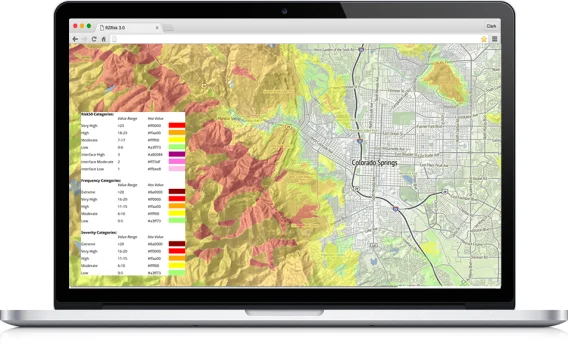
A strong answer names fires, structure counts, and a method. For example, RZRisk is built on roughly 20,000 years of simulated fire seasons behind each score, then checked against observed wildfire outcomes rather than simulation alone. A red flag is a vendor who can only describe validation in general terms.
2. What data and models drive the score?
A wildfire score is a summary of many inputs. You should know what they are. The core set usually includes vegetation and fuels, slope and terrain, weather and wind patterns, fire history, the built environment, and local suppression capacity.
Ask how detailed each input is. A model that uses a handful of generic fuel types will miss what a model with dozens of fuel models catches. Ask whether structure characteristics, like roof type and defensible space, are part of the score or a separate layer.
Also ask who builds the model. A team of data scientists alone sees fire on a screen. A team that includes fire behavior analysts and incident veterans brings what they have seen on the ground.
3. How precise is the score?
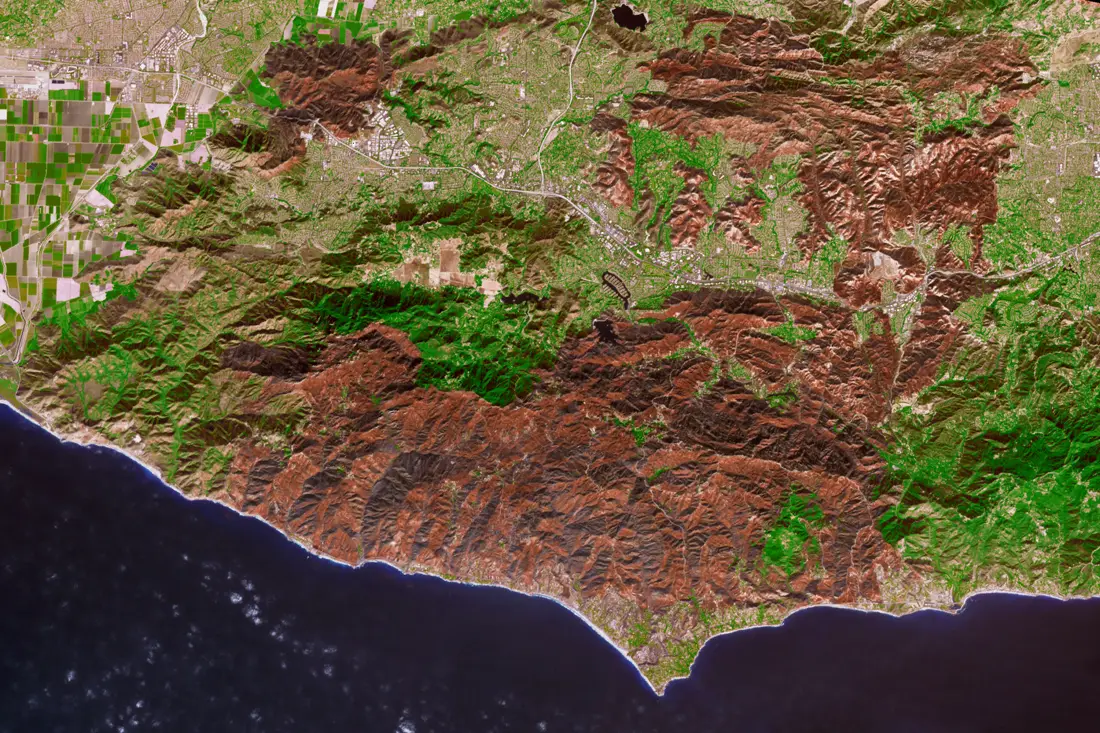
Wildfire risk can change sharply across a single street. A home at the top of a brushy canyon faces a very different threat than one a few hundred yards away on flat, irrigated ground.
Ask whether the score is calculated for each property or averaged across a ZIP code, grid cell, or territory. Territory-level averages are easier to build, but they penalize safe homes in risky areas and underprice risky homes in safe ones.
A strong answer is property-level scoring with clear documentation of the spatial resolution. A red flag is a score that gives every address in a neighborhood the same number.
4. How often is the score updated?
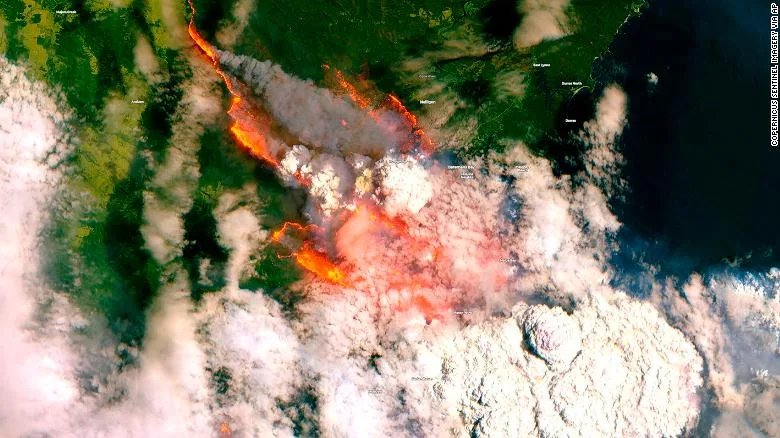
The landscape does not stand still. New fires leave burn scars that change fuel loads for years. Drought, development, and fuel treatments shift risk too.
Ask how often fuels and hazard layers are refreshed, and how quickly a large fire is reflected in the scores around it. Also ask how you will be told when a score changes. A quiet update can move a large share of your book without warning.
5. Can you explain the score to a regulator or policyholder?
A single number with no reasons behind it is a liability. Regulators are asking insurers to justify wildfire-driven rates and non-renewals. Agents need to explain to customers why a renewal changed. Policyholders who have mitigated their homes want credit for it.
Ask the vendor to show you a score breakdown for a sample property. You should be able to see which factors drove the result, whether that is fuels, slope, fire history, or structure features. Ask whether the vendor’s documentation has supported rate filings before.
A strong answer shows visible drivers for every score. A red flag is a “proprietary” black box that cannot be broken down.
6. Does the vendor help you manage accumulation?
Scoring one property at a time tells you about individual risk. It does not tell you how many of your policies one fire could reach. That is the question your reinsurers and your board care about.
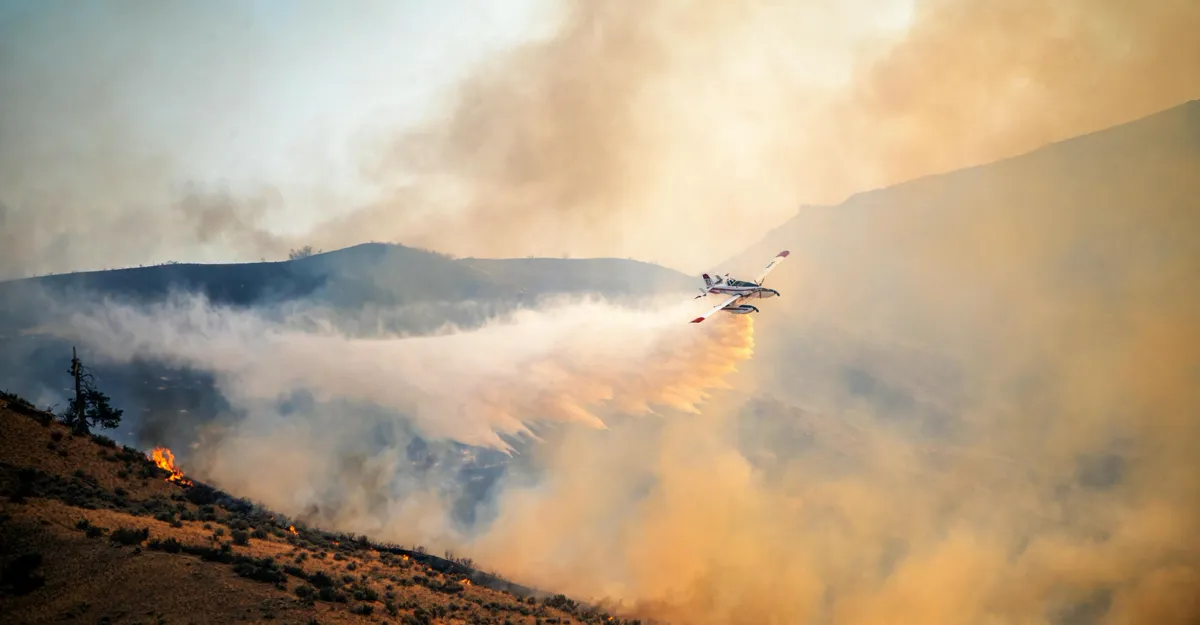
Many insurers still measure accumulation with simple distance rings, such as all policies within a few miles of a point. Fire does not move in circles. It follows wind, fuel, and terrain.
Ask whether the vendor models correlated exposure based on how fires actually spread. RZExposure is built around Correlated Risk Zones, areas where properties are likely to be hit by the same fire, derived from about 50,000 years of simulated fire history and validated against 48,000 damaged or destroyed structures. That gives capacity and reinsurance decisions a basis in fire behavior rather than geometry.
7. How does the score fit your workflow?
Even the best score fails if underwriters cannot get to it. Ask how the data is delivered and how long integration takes.
Most teams need more than one path: an API for automated rating and quoting, a map-based portal for reviewing single properties, and bulk scoring for portfolio reviews. Ask about coverage too. If you write in Canada as well as the U.S., confirm the score is available in every province and state you need.
Finally, ask what happens after you sign. Will you have access to analysts who can answer questions during a live fire, or only a support inbox?
Strong answers vs. red flags at a glance
| Question | Strong answer | Red flag |
|---|---|---|
| 1. Validation | Tested against named past fires and real structure outcomes | Validated only against its own simulations |
| 2. Inputs | Detailed fuels, terrain, weather, fire history, structures, response | Short or vague list of inputs |
| 3. Precision | Scored per property, resolution documented | Same score across a whole ZIP code or territory |
| 4. Updates | Regular refresh, fast updates after major fires, change notices | No clear schedule, silent changes |
| 5. Explainability | Visible score drivers that support filings and appeals | Black-box number |
| 6. Accumulation | Correlated exposure based on fire spread | Distance rings around a point |
| 7. Workflow | API, portal, and bulk scoring, plus analyst support | One delivery method, ticket-only support |
Build In-House or License a Vendor Score?
Some carriers consider building their own wildfire model. It can work, but the cost is higher than it first looks.
| Factor | Build in-house | License a vendor score |
|---|---|---|
| Time to use | Often a year or more | Weeks, depending on integration |
| Expertise needed | Fire behavior scientists, GIS, data engineering | Underwriting and IT time for integration |
| Validation | You must source fire outcome data yourself | Vendor should supply validation evidence |
| Ongoing upkeep | Fuel and hazard refreshes are on you | Included in the license |
| Regulatory support | You document every assumption | Vendor documentation can support filings |
For most carriers, licensing makes sense, with the seven questions above as the filter. Building in-house fits best when you have a large wildfire book and a team already doing catastrophe modeling.
Conclusion
A wildfire risk score shapes who you write, what you charge, and how much one fire can cost you. That makes the choice of vendor an underwriting decision, not just a data purchase.
The seven questions come down to one test: can the vendor prove the score matches how real fires behave, and can you explain it to everyone who asks? Validation, precision, freshness, transparency, accumulation, and workflow all follow from that.
Ready to see how your book scores? Learn how RedZone’s wildfire risk scoring for underwriters can help you write with more confidence in high-hazard areas.
Related content
- 2026 Wildfire Season Outlook: What Insurers Should Expect and How to Prepare
- RZRisk Canada brings property-level wildfire intelligence to Canadian insurers
- Real-time wildfire alerts for your portfolio with RZAlert
- Wildfire analysts and expertise from RZIntel
FAQ
What is a wildfire risk score?
A wildfire risk score is a rating of how likely a property is to be damaged by wildfire. Insurers use it to guide underwriting, pricing, and portfolio decisions.
How do insurers use wildfire risk scores?
They use scores to decide whether to write or renew a policy, how to price it, and how much exposure to hold in high-hazard areas.
What makes one wildfire risk score more accurate than another?
Validation against real fire outcomes, detailed inputs, and property-level resolution. A score tested on homes that actually burned is more reliable than one tested only on simulations.
How often should a wildfire risk score be updated?
Often enough to reflect new fires, fuel changes, and development. Ask vendors for their refresh schedule and how they flag changes.
What is wildfire accumulation risk?
It is the risk that one fire damages many policies at once. It is managed by modeling which properties are likely to burn in the same event.
Why do distance rings miss wildfire accumulation?
Fire spreads with wind, fuel, and terrain, not in circles. Rings can overcount safe properties and miss exposed ones outside the radius.
Can homeowner mitigation change a wildfire risk score?
It depends on the model. Scores that include structure features, like roof type and defensible space, can reflect mitigation work.
Ready to put these questions to work?
Talk to a RedZone wildfire expert
About the Author
Clark Woodward is the Founder and CEO of RedZone, which has helped insurers understand and manage wildfire risk since 2002. He leads a team of software engineers, fire behavior analysts, and incident command veterans who build property-level wildfire tools for underwriting, portfolio management, and live fire response. He brings the perspective of a firefighter, data scientist, and entrepreneur, and began his career in 1999 as a consultant with the USGS Energy Resources Team.
RedZone is based in Boulder, Colorado.