
Below are summaries from the National Significant Wildland Fire Potential Outlook. The National Interagency Fire Center published the outlook for the period of December 2025 through March 2026. Additionally, the full wildfire outlook can be located here.
Year-to-Date Statistics:
| Year-to-date statistics | Number of Fires | Acreage Burned |
| 2025 (1/1/25-11/30/25) | 62,580 | 4,969,735 |
| 10-year Average (2015-2024) | 55,269 | 7,226,951 |
| Percentage of 10-year Average | 113% | 69% |
Source: https://www.nifc.gov/fireInfo/nfn.htm
Observations in November:
Wildfire activity across the U.S. remained low through the month, with only brief increases in the Southern and Eastern Areas typical of late fall. The National Preparedness Level held at 1 throughout the month, reflecting quiet national conditions. Despite wildfire counts running above average at 113% of the 10-year mean, total acres burned remain well below average at 69%.
Precipitation patterns were highly variable: California, southern Nevada, and western Arizona saw well above normal rainfall, which helped remove drought across much of California. In contrast, large portions of the northern and central West, the Gulf Coast, the Mississippi Valley, and the Mid-Atlantic remained drier than normal.
Drought affected just over 43% of the country, with intensification across the Southeast, southern Plains, and parts of the Upper Midwest, while notable improvement occurred in California, the Appalachians, the Northeast, and portions of the northern Rockies.
Temperatures were above normal across most areas from the West Coast to the Mississippi River, while the Appalachians, the Northeast, and parts of Florida were cooler. Overall, November brought meaningful moisture to the Southwest and parts of the West but maintained persistent fire and drought concerns across the Southeast and southern Plains.
US Drought Status
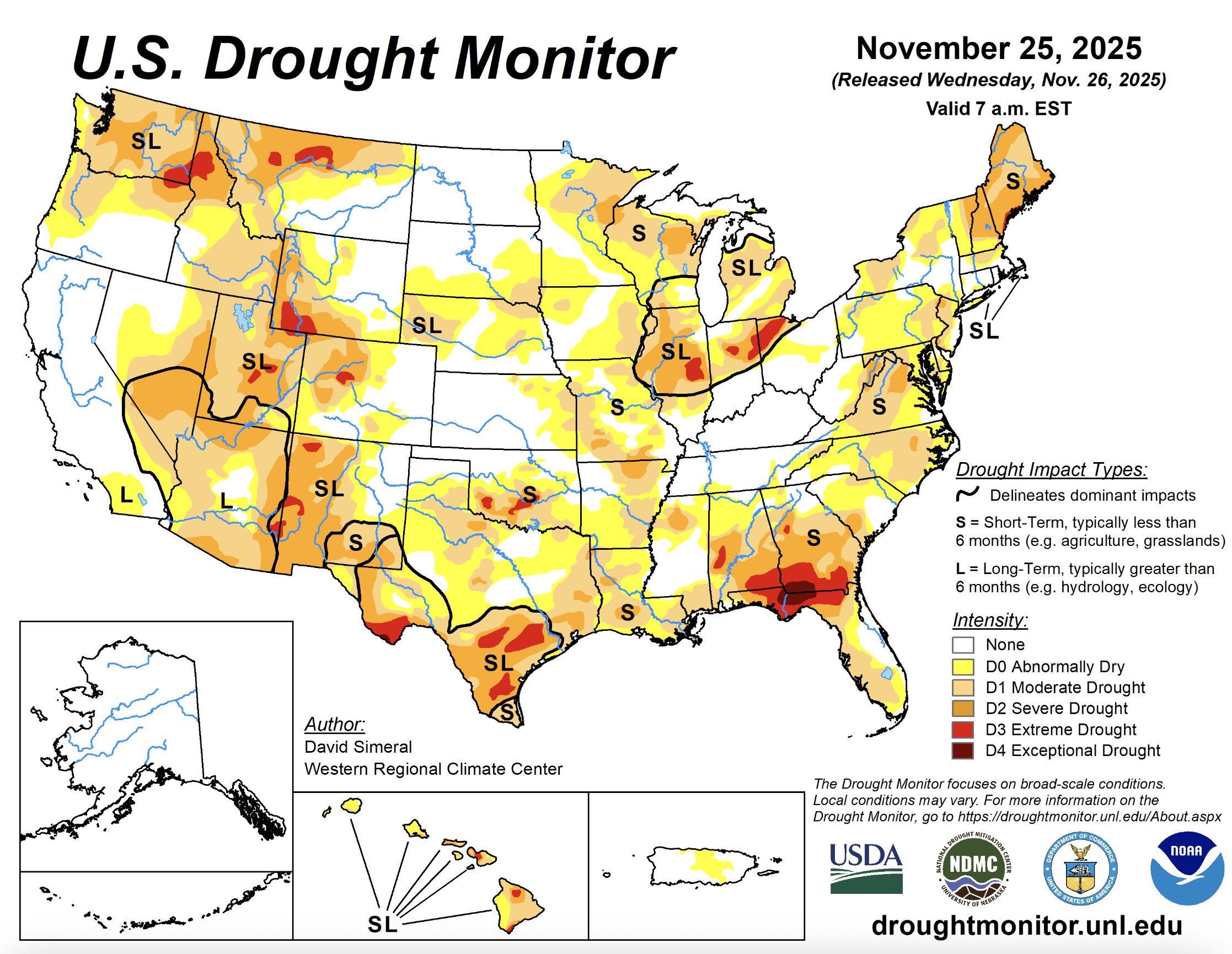
U.S. drought conditions were mostly steady through November 26, with just over 43% of the country in drought, but regional shifts occurred: drought intensified in parts of the southern Plains, Southeast (notably the northeast Gulf Coast), and Upper Midwest, while improving across much of the Mid-Atlantic, Northeast, and large areas of the West, including widespread removal in California and pockets of the Pacific Northwest. Extreme drought remains scattered in parts of the Northwest, Intermountain West, and Southwest, as well as in South Texas, southern Oklahoma, portions of the Southeast, and sections of the Midwest/Lower Great Lakes, and a small area of exceptional drought has emerged in southwest Georgia and the Florida Panhandle. Looking ahead, drought is expected to persist across much of the southern U.S. and potentially expand in the southern High Plains, while improvement is favored for eastern Oklahoma/Texas into the Mid-Mississippi Valley, Lower Great Lakes, Northeast, and the Northwest; the Southeast may see short-term relief from early-month rains, though drier winter forecasts could allow drought to redevelop or worsen later.
Wildfire Outlook for December to March:
Most of the U.S. is expected to see seasonally low significant fire potential through the outlook period, but some southern areas stand out. In December and January, above-normal fire potential is forecast for parts of the southern High Plains and the northeast Gulf Coast, with January also bringing expanded risk across all of Florida. By February and March, above-normal potential is projected to spread widely across the southern Plains, South Texas, the Gulf Coast into the southern Appalachians, much of the Southeast, and Puerto Rico, while Arkansas into parts of the Ohio Valley may stay below normal due to a wetter winter.
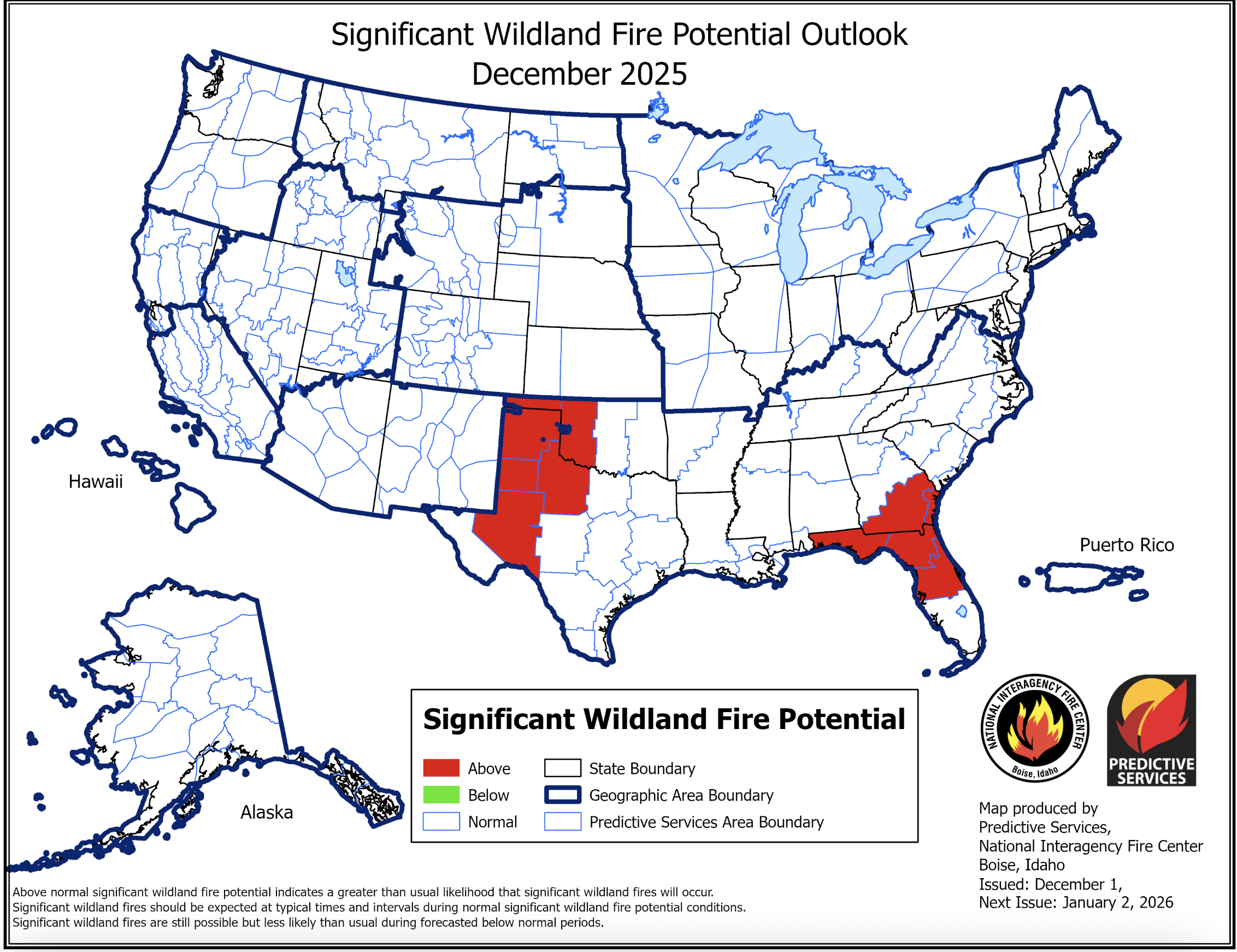
December 2025 NIFC Predictive Services Fire Potential Outlook
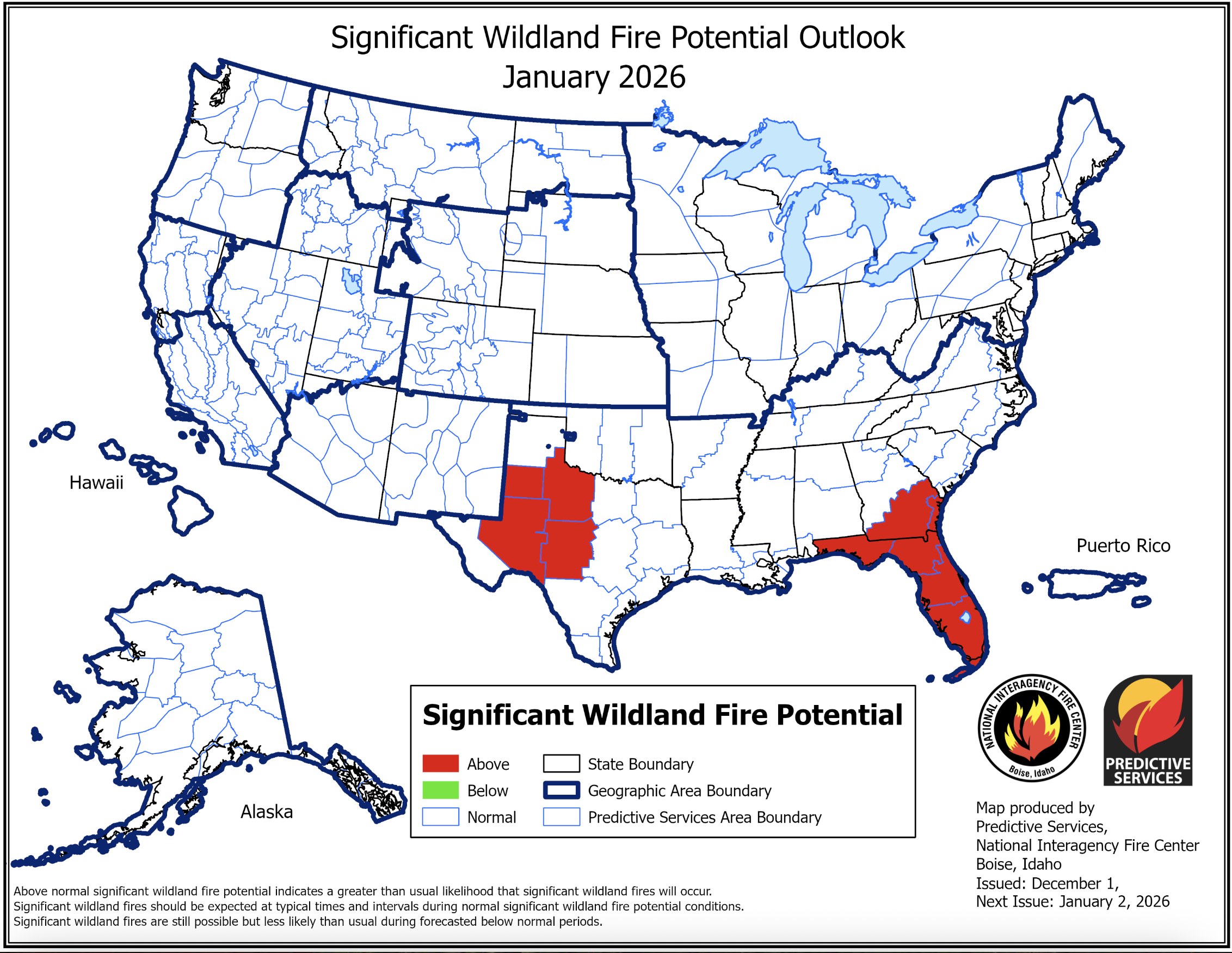
January 2026 NIFC Predictive Services Fire Potential Outlook
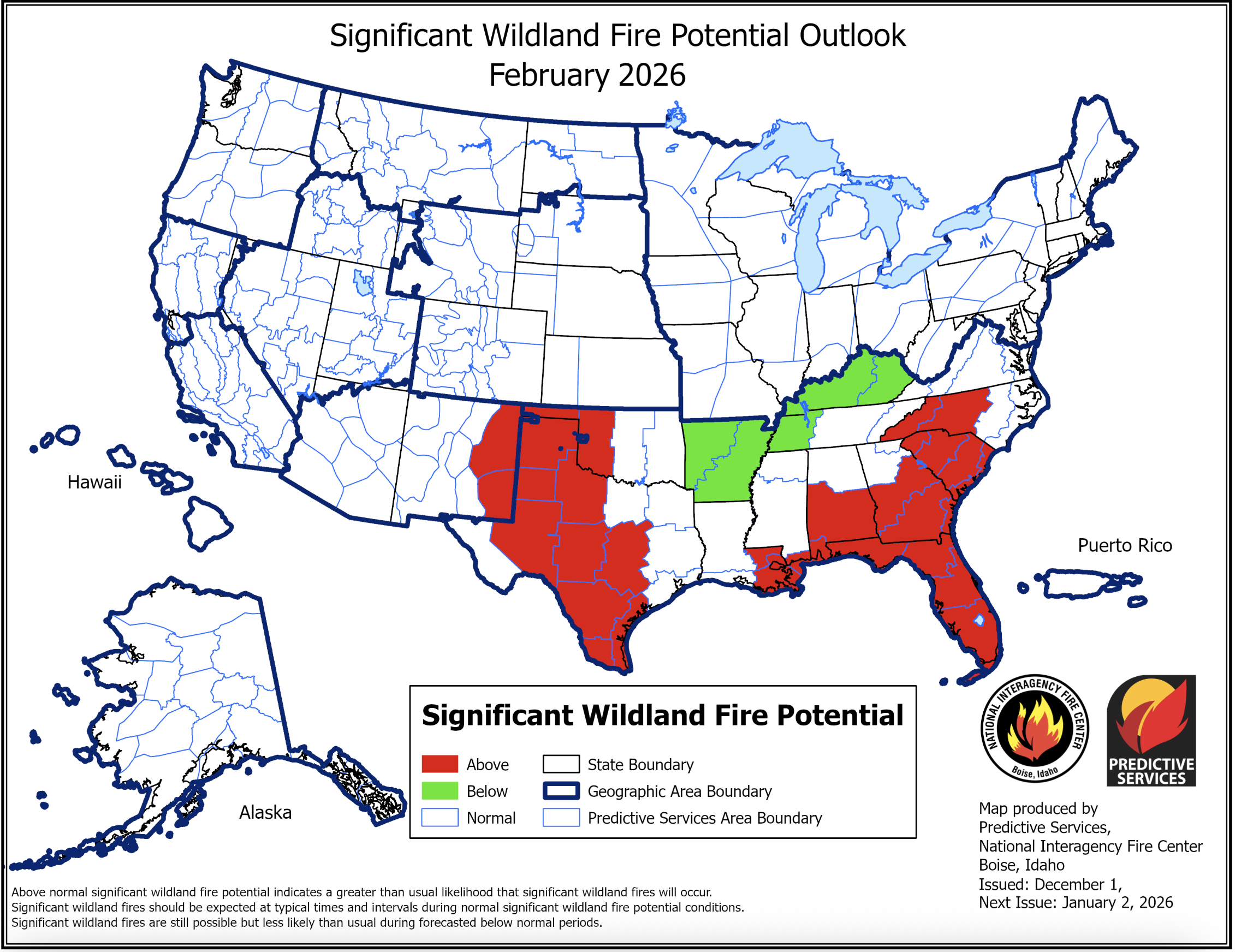
February 2026 NIFC Predictive Services Fire Potential Outlook
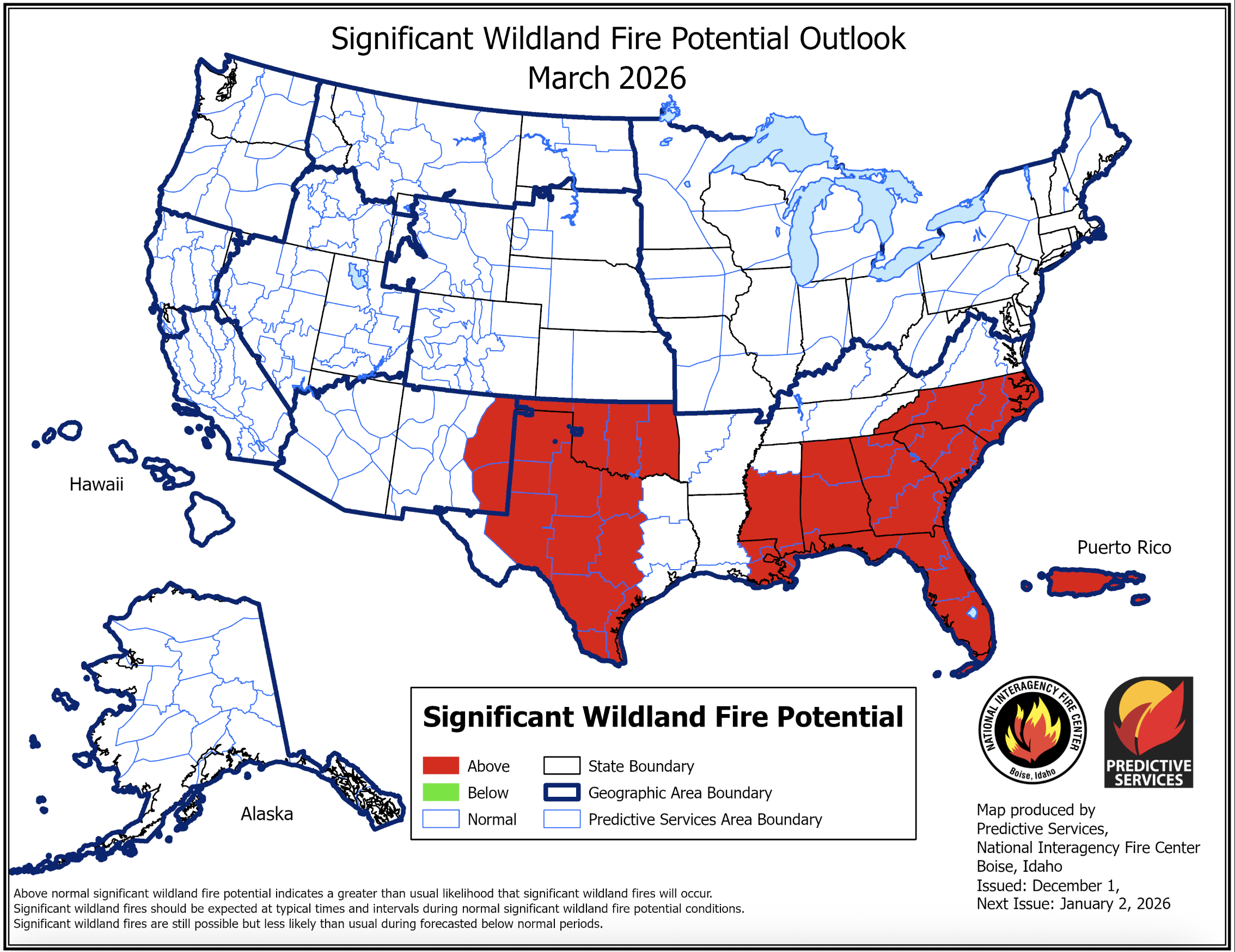
March 2026 NIFC Predictive Services Fire Potential Outlook
Source: NIFC